What is SerpSling AI?
SerpSling AI is a platform focused on helping websites surface inside AI-powered discovery environments rather than relying only on traditional search results. Instead of asking users to manually piece together schema, content briefs, technical audits, trust blocks, and local landing pages, the software brings those tasks together in one workflow built around AI visibility.
In practical business use, the product sits at the intersection of content production, local SEO, reputation signaling, conversion support, and agency services. That makes it relevant not just for marketers trying to attract traffic, but also for consultants, local businesses, publishers, and niche-site builders who want their pages to be recognized as credible answers when tools like ChatGPT, Google AI, and Perplexity assemble recommendations.
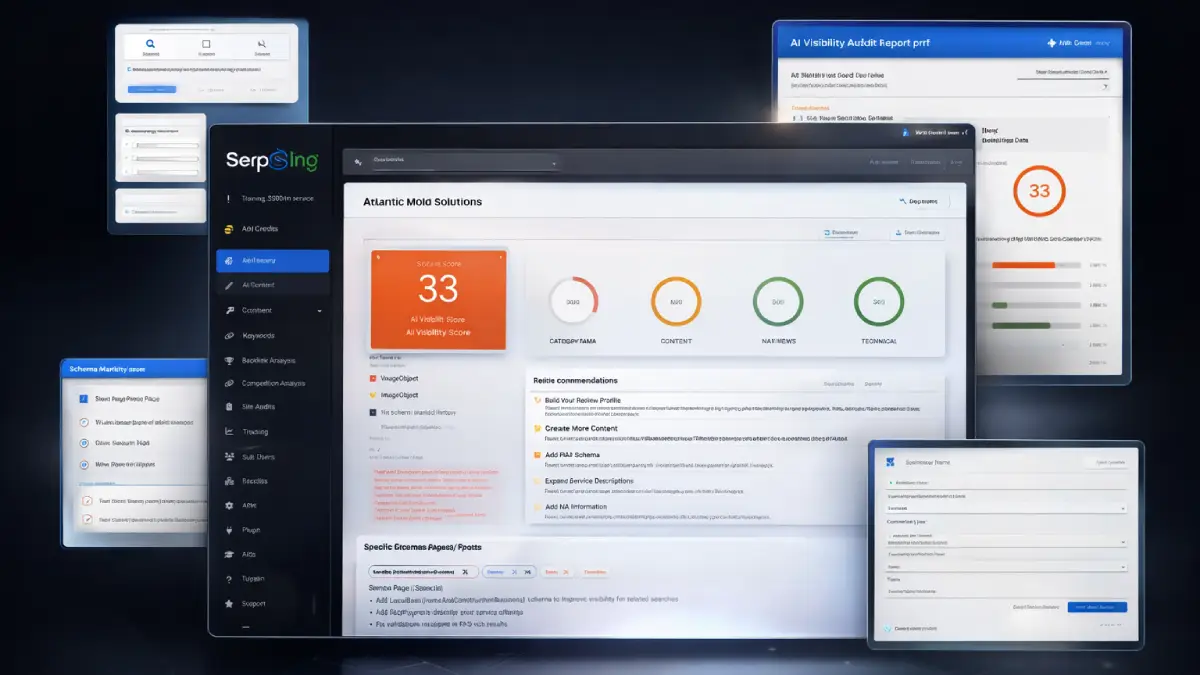
How it works (3 simple steps)
- Step 1 — Audit your AI visibility: You start by entering a website or business profile, and the platform scans for the reasons that AI engines may be overlooking the site. It looks at content depth, structured data, trust elements, reviews, location relevance, and technical gaps, then turns that into a clear action map instead of a vague diagnostic.
- Step 2 — Apply the improvements: Once the weak spots are identified, SerpSling AI helps correct them by adding or refining schema, strengthening page relevance, creating FAQ and trust sections, and filling obvious content holes. A big part of the appeal is that the user is not expected to hand-code or manually engineer every fix.
- Step 3 — Publish optimized assets: After the site is updated, the content can be pushed live with minimal friction. That matters because AI visibility work only becomes useful when pages are actually deployed, indexed, and positioned to be read as strong answers for buyer-intent queries.
See how SerpSling AI works
Step-by-step walkthrough from my YouTube channel

Key features that matter
SerpSling AI becomes more compelling when you look at it as an execution system instead of just another optimization dashboard. The main value is not a single feature in isolation. It is the way the product connects auditing, fixing, publishing, and client delivery into a more commercial workflow that can support lead generation, distribution, and recurring service offers.
- AI visibility audit: the platform checks why a site is missing from AI-driven recommendations and shows which content, trust, and technical factors need attention first.
- Automated schema markup: pages can be enhanced with AI-friendly structured data so search engines and answer engines have more context about services, locations, and business details.
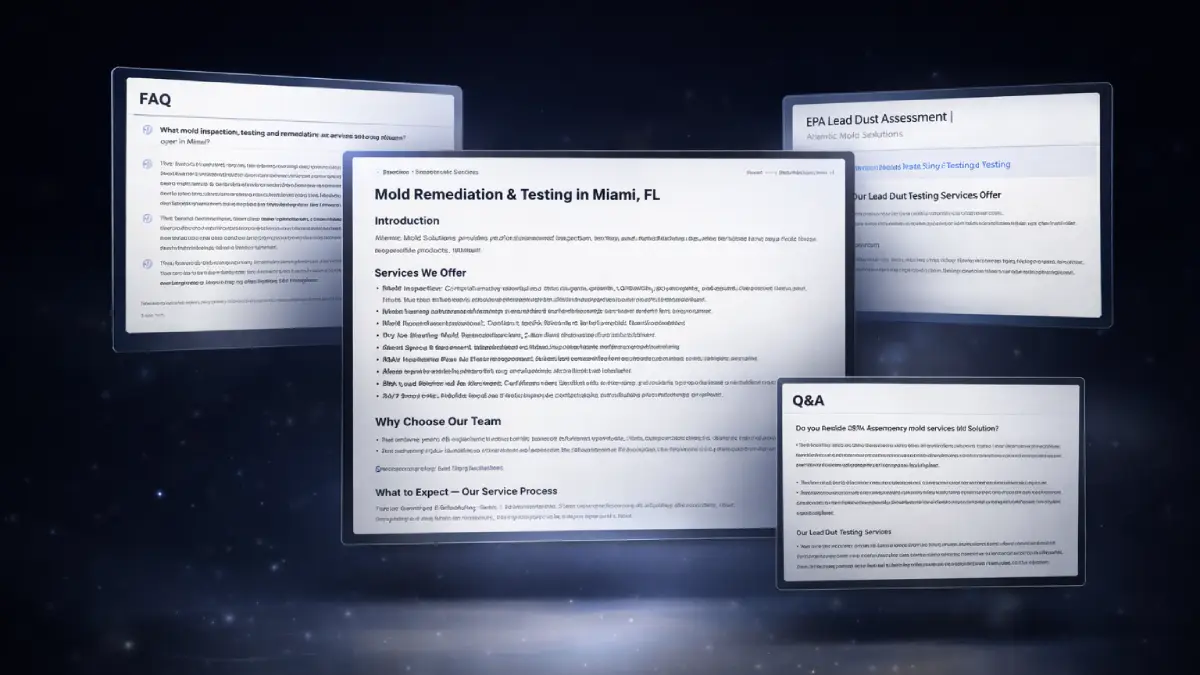
- Done-for-you content generation: the software creates answer-oriented content, service copy, FAQs, and related assets aimed at becoming useful source material for AI-generated responses.
- Location-based optimization: businesses can create geographically targeted pages that fit local intent searches and improve discoverability for “near me” style queries.
- FAQ and trust block builder: pages can be expanded with credibility layers such as FAQs, “why choose us” sections, and supporting explanations that help AI systems interpret authority and relevance.
- Smart targeting rules: different pages can receive different schema and optimization logic, which is useful when a site has multiple service types or varied intent categories.
- One-click content deployment: updated pages and generated assets can be pushed live quickly instead of sitting in draft form waiting for manual formatting.
- Competitor comparison tool: agencies and consultants can benchmark multiple websites side by side to understand where competing businesses are stronger or weaker.
- Multi-language content creation: the platform supports multilingual publishing, which opens up less competitive AI search opportunities outside English markets.
- Content and review gap analysis: weak authority signals, thin review coverage, and missing topical support can be identified before they quietly suppress visibility.
- Live schema preview: users can inspect what structured data will be read before publishing, which gives more confidence and fewer blind changes.
- Downloadable audit reports: polished PDF outputs make the platform easier to use in consulting, prospecting, or internal review workflows.
- Agency license and client management: the service model is built in, which matters for users who want to sell AI search optimization instead of only using it on their own projects.
- Auto-updates and future support: the promise here is longer-term compatibility as search interfaces and AI ranking behaviors keep evolving.
Pros & Cons (realistic)
Pros
- Good timing for a growing search trend: interest in AI answer visibility is rising, so a product built specifically around that shift has a stronger positioning angle than general SEO tools.
- Accessible for non-technical users: automated schema, guided audits, and one-click publishing reduce the friction for business owners and marketers who do not want to touch code.
- Strong agency-service potential: white-label reports, multi-site workflows, and commercial usage make it easier to package this as a recurring offer for clients.
- Local business use case is clear: location pages, trust sections, and authority improvements can fit naturally into local lead-generation campaigns.
- The funnel supports several monetization angles: prospecting, authority building, syndication, and niche-site training give buyers more than one route to turn the software into income.
Cons
- Visibility gains still depend on site quality: software can improve structure and content, but weak offers, poor branding, or thin business credibility will still hold a site back.
- AI search is still a moving target: the market is evolving, which means no tool can promise permanent positioning in systems that keep changing.
- Some of the best scalability sits in the upgrades: heavy users, agencies, and operators chasing bigger volume will likely feel the pull toward OTOs quickly.
- Automation can create generic output if unchecked: users still need editorial judgment, especially when publishing content that needs to convert real buyers instead of just filling a page.
My personal angle (how I’d use it)
- For local lead-gen sites: I would use SerpSling AI to build city-and-service page clusters, reinforce them with FAQs and authority signals, and position the sites to capture buyer-intent search traffic from AI answer surfaces.
- For service retainers: the downloadable reports and audit-driven workflow make it easier to sell monthly optimization packages to small businesses that want more visibility but do not know why AI search tools ignore them.
- For content distribution strategy: I like the angle of creating answer-focused pages that are not just SEO filler but assets meant to be cited, summarized, and surfaced in recommendation-style search experiences.
- For fast offer validation: rather than building a complicated agency system first, I would use the front end to prove there is demand, then move into the higher tiers only once client acquisition and delivery are working consistently.
Bonuses
My main attention here is on the product itself, how usable the AI search optimization workflow is, and which part of the funnel makes the most sense depending on whether you want a simple starter setup or a broader service stack. For the full bonus list and delivery details on Tool Review Central, use the internal page below:
Bonus details
See what’s included and how delivery works after purchase.
Quick buying decision (what I’d pick)
If I wanted the widest commercial setup in one purchase, I would lean toward the SerpSling AI Bundle because it combines the main platform with unlimited usage, client acquisition tools, authority-building assets, syndication support, and extra training in a single offer. The Front-End is the clean entry point for users who want the core audit-and-optimization system first. OTO1 Unlimited is the obvious step for people planning to scale volume, OTO2 AIgency Valet is the prospecting layer for client hunting, OTO3 DFY Authority adds authority-building assets, OTO4 SyndLab supports citation and distribution workflows, and OTO5 AI Niche Site Blueprint + Zairp is the low-ticket expansion for users who want a broader niche-site and monetization play.
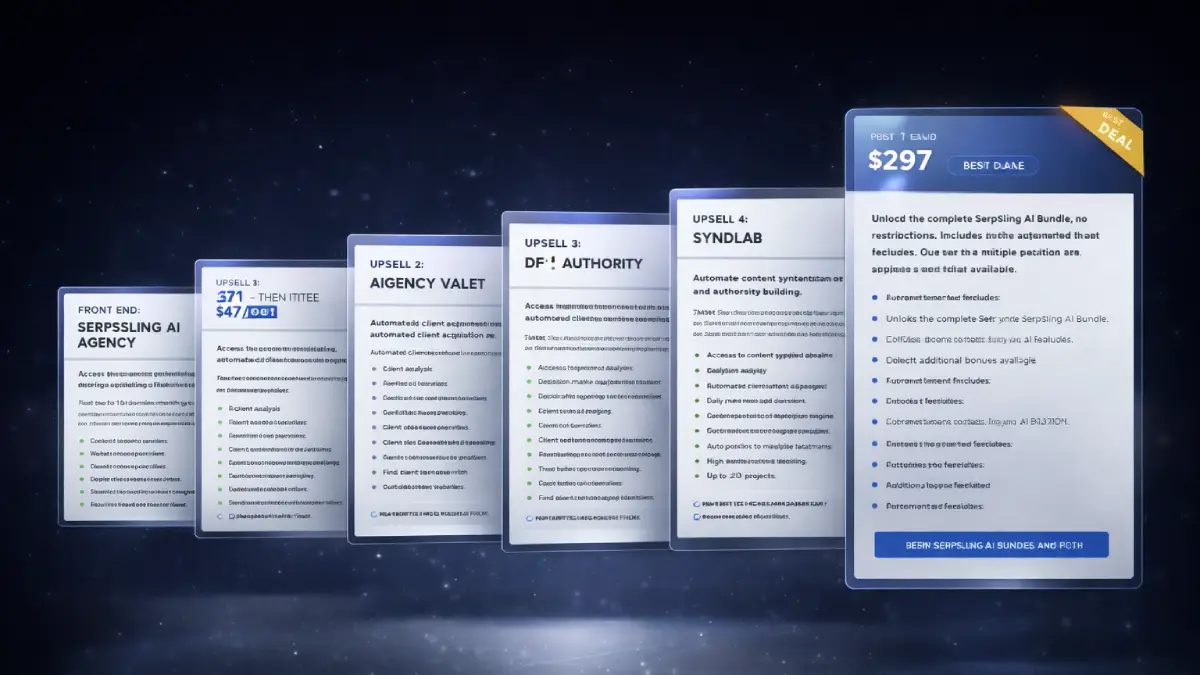
Pricing & funnel breakdown
| Offer | Price | Best for |
|---|---|---|
| Bundle — SerpSling AI Bundle | $247 | Best overall option for buyers who want the complete stack immediately. Includes the front end plus Unlimited, AIgency Valet, DFY Authority, SyndLab, and AI Niche Site Blueprint + Zairp, along with bonuses, tutorials, and knowledge-base access. Strongest fit for users who already know they want both delivery and monetization angles covered. |
| Front-End — SerpSling AI Agency | $34.95 | Core access to the AI visibility optimization system. Includes support for up to 10 domains, monthly AEO content generation, AI visibility auditing, schema deployment, one-click publishing, white-label client reports, keyword tools, ranking analysis, backlinks analysis, an agency license, and basic support. Good for getting started without overcommitting. |
| OTO1 — SerpSling AI Unlimited | $1 trial then $47/mo |
Best for agencies, media operators, and marketers who expect to run ongoing campaigns at scale. Removes usage caps and opens the door to unlimited audits, optimizations, content generation, deployments, and faster processing. |
| OTO2 — AIgency Valet | $77 | Built for users who want client acquisition help alongside the software itself. Adds lead discovery, niche and location prospecting, outreach support, decision-maker contact discovery, and sales templates that make the service side easier to launch. |
| OTO3 — DFY Authority | $47 | Useful for users who want stronger authority signals and faster leverage through high-authority expired domains. Includes filtering tools, metrics, bonus publishing assets, and training around using these domains strategically. |
| OTO4 — SyndLab | $67 | Best for users who want broader distribution and citation support. Automates content syndication across multiple platforms and aligns well with authority-building and AI search visibility campaigns. |
| OTO5 — AI Niche Site Blueprint + Zairp | $27 | A lower-ticket expansion for buyers who want training, case studies, monetization ideas, and an additional AI SEO automation app. Makes sense for niche-site builders and users who want a wider business play beyond client work. |
Direct links (bundle first)
Open in a new tab. These are affiliate links.
FAQ
Is SerpSling AI more about classic SEO, or is it built for AI search visibility?
The positioning is centered on AI search visibility. Traditional SEO elements still matter underneath, but the product is framed around helping sites become easier for tools like ChatGPT, Google AI, and Perplexity to understand, trust, and recommend.
Can beginners use SerpSling AI without technical experience?
Yes. That is one of the bigger selling points. The workflow is designed around auditing, auto-fixing, generating content, and publishing without expecting the user to manually implement advanced schema or technical SEO logic.
Who should think seriously about Unlimited or AIgency Valet?
Anyone planning to build a service around the software is the most obvious candidate. Unlimited suits users who expect volume, while AIgency Valet fits people who want help finding and pitching businesses that need AI visibility optimization.
Do you have a bonus page?
Yes — bonus info is here: /bonus/.
About the reviewer

Samuel Marco
I publish hands-on reviews of AI software and online business tools, with an emphasis on practical workflows, monetization potential, and whether a product can realistically help someone produce more output, save time, or build a marketable service around it.
Final verdict
SerpSling AI is built around a market that is still taking shape but already attracting serious attention: visibility inside answer engines. By combining audits, schema deployment, trust optimization, location targeting, answer-focused content, and agency-friendly reporting, it gives users a more direct route to participating in that shift without turning every campaign into a technical project. The broader funnel expands that foundation into scale, prospecting, authority building, syndication, and niche-site monetization, which means the offer can support several business models beyond simple on-page optimization. The real deciding factor will not be whether the software can generate pages or reports. It will be whether the user can choose the right market, improve weak sites meaningfully, and turn those improvements into leads, conversions, or recurring client revenue. For buyers who want a practical entry point into AI search optimization with clear commercial potential, SerpSling AI makes a solid case.
Want a faster way to improve AI search visibility, publish schema-friendly pages, and turn that process into your own traffic strategy or client service?
The Bundle gives the broadest value. Front-End is the easiest place to begin. OTO1 is for scale, OTO2 is for client acquisition, OTO3 is for authority building, OTO4 is for syndication, and OTO5 adds training plus an extra AI SEO tool.