What is OpenClaw Cracked?
OpenClaw Cracked is an AI-assisted training and business platform designed to help users assemble the practical pieces of an online business without bouncing between unrelated courses and disconnected tools. Inside the offer, the focus stretches across copywriting, landing pages, sales page logic, VSL creation, onboarding, app-related workflows, integrations, and growth systems.
In practical terms, this is built for people trying to move from “I know I should build something online” to “I can produce assets, connect workflows, and launch offers with structure.” That makes it relevant not only for solo entrepreneurs, but also for freelancers, service providers, product creators, and operators who want to turn AI into a working business engine instead of just a content toy.
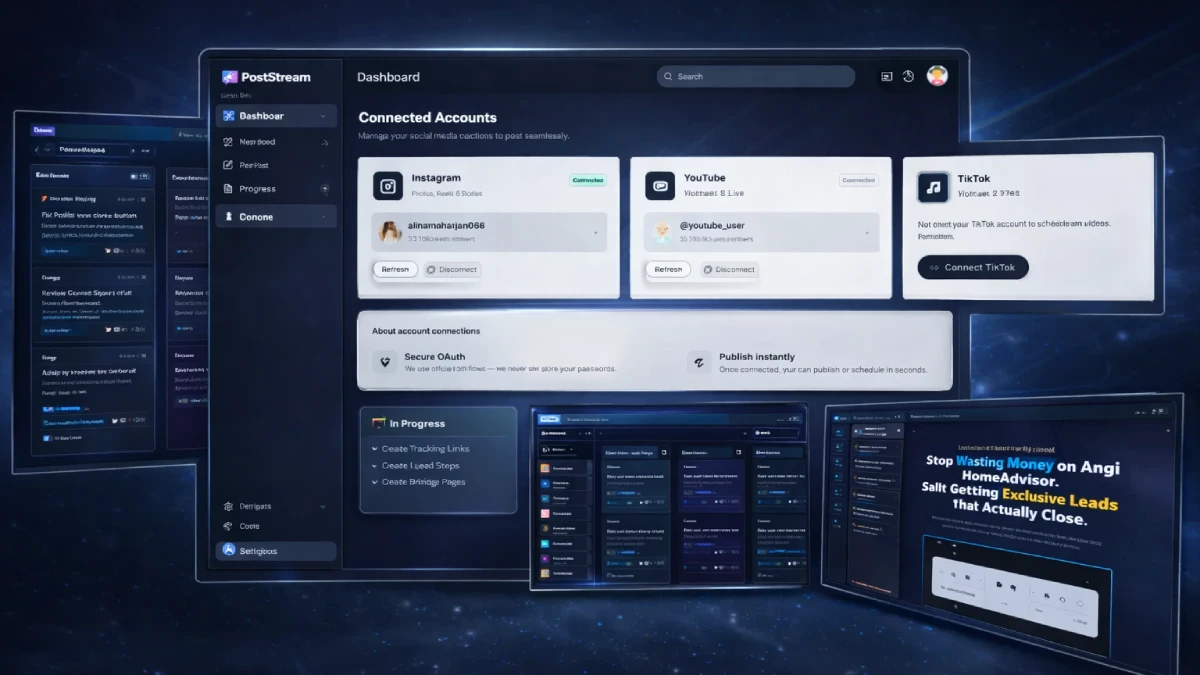
How it works (3 simple steps)
- Step 1 — Enter the platform and complete the guided setup: After login, you begin with the member area and onboarding path, which is there to reduce the usual confusion that hits when a platform includes multiple business layers.
- Step 2 — Build foundational skills that support revenue: The training moves through conversion-focused topics like copywriting, lead capture pages, sales messaging, and video-based persuasion so you can create assets that actually support offers.
- Step 3 — Apply the system to real projects: Once the core lessons click, you can start assembling funnels, digital products, simple apps, client workflows, and automation-driven business processes that can be reused and expanded.
See how OpenClaw Cracked works
Step-by-step walkthrough from my YouTube channel

Key features that matter
The most useful parts of OpenClaw Cracked are the ones that help users bridge the gap between learning and shipping. These are the elements that stand out from a business-building perspective.
- AI-centered marketing education: the platform teaches practical skills around copy, offers, sales messaging, and asset creation with an AI-supported lens rather than leaving users to piece frameworks together on their own.
- 10-step onboarding flow: a guided path lowers friction for beginners and gives the platform a more usable entry point than many training-heavy launches.
- Landing page and funnel training: users learn the mechanics behind pages that capture leads, frame offers, and push visitors toward action.
- VSL instruction: the inclusion of video sales letter training makes sense for users selling digital products, coaching, consulting, or high-conversion info offers.
- App-building exposure: OpenClaw goes beyond pure marketing by bringing in workflows for GitHub, Vercel, deployment, and lightweight application creation.
- Business model development: lessons are positioned around creating offers, structuring income paths, and building something that can be scaled rather than treated as a one-off hustle.
- Integration and automation thinking: the connector side matters because it pushes users toward systems that communicate with each other instead of living in isolated silos.
- Service and agency potential: acquired skills can be turned outward into client work, consulting packages, implementation services, or agency-style retainers.
- Expanded training ecosystem: the vault, control layer, app workshop, and business modules increase the platform’s ceiling for users who want more than introductory lessons.
- Monetization flexibility: digital products, lead generation, service delivery, funnels, automation setup, and client projects all sit within its realistic usage range.
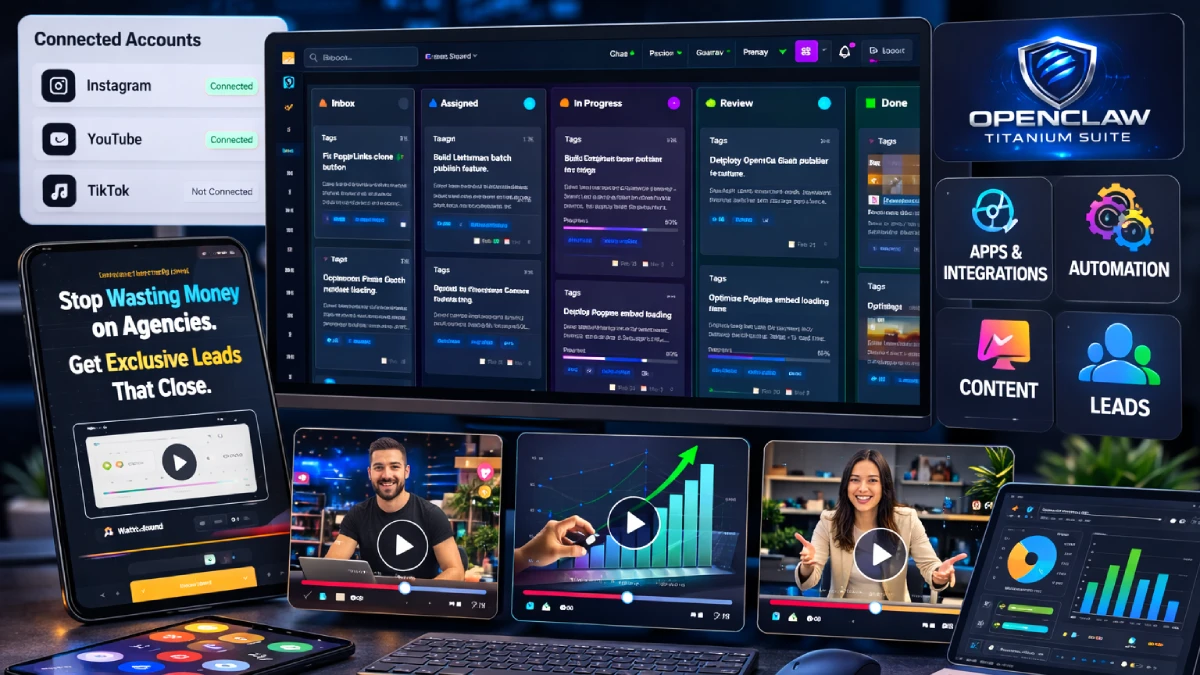
Pros & Cons (realistic)
Pros
- Broader than a basic training course: it covers skill acquisition, implementation, automation concepts, and monetization paths instead of stopping at theory.
- Useful for multiple business models: creators, freelancers, solo operators, and agency-minded users can all find workable angles inside the ecosystem.
- Onboarding improves usability: the structured entry point should help newer buyers avoid the paralysis that often comes with large training libraries.
- App-builder angle adds leverage: introducing deployment and technical workflows can open more advanced offers and positioning over time.
- Strong expansion path: the bundles and OTOs make it possible to move from beginner implementation toward deeper automation, agency, and connector-level use.
Cons
- Not an instant-results button: the platform can shorten the path, but users still need to study, build, test, and iterate to turn training into revenue.
- Scope can feel ambitious: because it touches marketing, business systems, apps, and automation, some buyers may need time to decide what to apply first.
- Full value sits higher in the funnel: serious users will probably be tempted by upgrades once they want deeper skills, integrations, or commercial positioning.
- Execution quality matters more than access: having templates and training is useful, but weak offers, poor positioning, or inconsistent publishing can still stall results.
My personal angle (how I’d use it)
- As an operator playbook: I’d treat OpenClaw Cracked as a working system for connecting offer creation, pages, VSL logic, and backend process design rather than consuming it as passive education.
- For monetizable skill stacking: the strongest move is combining copy, funnel creation, and lightweight automation into a service package that clients can understand and buy.
- For building owned assets: I like the idea of using it to create internal landing pages, digital offers, simple tools, and marketing infrastructure that compound over time.
- For moving from freelance tasks to systems: this can help someone graduate from random one-off gigs into a more durable business model with repeatable workflows and clearer deliverables.
Bonuses
I’m keeping this page focused on the platform, funnel, and buying logic rather than loading it up with bonus details. If you want the full bonus breakdown and delivery notes on Tool Review Central, open the internal page below:
Bonus details
See what’s included and how delivery works after purchase.
Quick buying decision (what I’d pick)
If the goal is to extract the widest business leverage, I’d look first at the Platinum Bundle because it layers in the complete funnel, extra software access, integrations, and the deepest overall environment. The Gold Bundle makes sense for buyers who want the full OpenClaw pathway without the added external software stack. The Silver Bundle is the more budget-aware middle route, while the Front-End is the best starting point if you mainly want to validate the training style and foundational framework before scaling up.
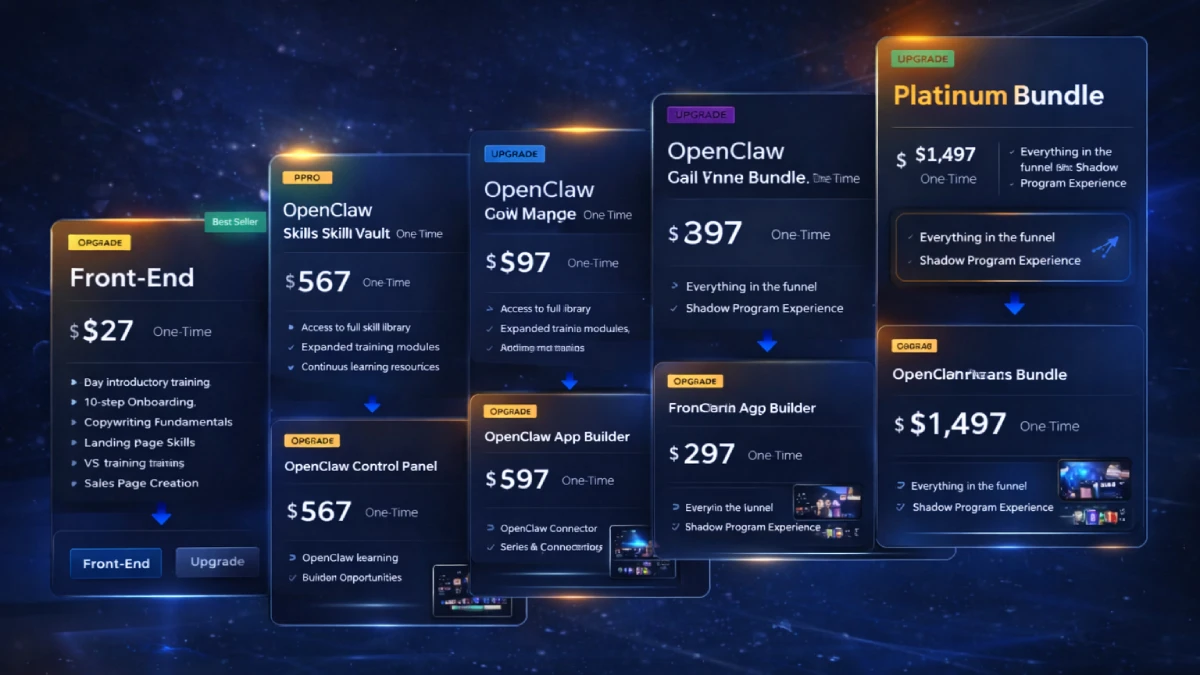
Pricing & funnel breakdown
| Offer | Price | Best for |
|---|---|---|
| Front-End — OpenClaw Cracked | $27 one-time | Entry access to the platform with membership, a 3-day intro training sequence, 10-step onboarding, copywriting basics, landing page instruction, VSL lessons, and sales page training for users who want the foundation before committing to the full stack. |
| Bundle Option #1 — OpenClaw Platinum Bundle | $1,497 | The complete top-tier package. Includes the full OpenClaw funnel, Shadow Program experience, bonuses, tutorials, knowledge-base access, software suite access, and integrations with tools such as MintBird, PopLinks, QuizForma, Letterman, Global Control, and CourseSprout. |
| Bundle Option #2 — OpenClaw Gold Bundle | $997 | Best fit for users who want the entire OpenClaw training and upgrade path, plus the Shadow Program experience, without stepping into the larger software-suite layer included in Platinum. |
| Bundle Option #3 — OpenClaw Silver Bundle | $297 | Strong middle-ground choice for buyers who want most of the important expansion modules, live build exposure, tutorials, bonuses, and implementation help without paying for the highest bundle tiers. |
| OTO1 — OpenClaw Skills Vault | $67 | Best for buyers who want more depth beyond the starter curriculum. Adds a broader skill library, extra marketing modules, and ongoing educational material that can support better execution over time. |
| OTO2 — OpenClaw Control Panel | $67 | Useful for users who want a more centralized operational view. This upgrade is about visibility, coordination, and managing OpenClaw activity more cleanly once multiple projects start running. |
| OTO3 — OpenClaw App Builder | $97 | A practical workshop for users who want to expand beyond pages and copy into simple app creation, GitHub workflows, Vercel deployment, and basic product-building capability. |
| OTO4 — OpenClaw Business Builder | $297 | Built for turning isolated skills into a structured online business. Covers offer creation, monetization, scalability, and longer-term growth systems for users thinking bigger than side experiments. |
| OTO5 — OpenClaw Agency Premium | $297–$697 | The client-service path. Best for freelancers and agencies who want to convert OpenClaw knowledge into paid implementation, recurring services, delivery processes, and multi-project workflows. |
| OTO6 — OpenClaw Connector Series | $297 | Best for automation-minded users. Focuses on integrations, API-level connections, workflow linking, and creating a more flexible business backend across tools and services. |
Direct links (bundle options first)
Open in a new tab. These are affiliate links.
FAQ
Is OpenClaw Cracked mainly software, training, or a business system?
It sits across all three. The front end introduces the learning framework, while the broader funnel expands into more training, operational control, business growth, app-related implementation, and automation-oriented modules.
Can beginners use OpenClaw Cracked?
Yes. The entry offer includes a guided onboarding path and introductory lessons meant to help users understand the platform before tackling the more advanced business and integration layers.
Why does the App Builder upgrade matter?
Because it widens the monetization angle. Once you add simple application workflows to copy, funnels, and offer creation, you can pitch more valuable services and build more differentiated assets.
Do you have a bonus page?
Yes — bonus info is here: /bonus/.
About the reviewer

Samuel Marco
I publish hands-on reviews of AI software and online business tools, with a focus on real workflows, monetization paths, and what actually matters when you try to scale. My goal is to help you decide fast and choose tools that can produce real-world results.
Final verdict
OpenClaw Cracked has the most appeal for people who do not just want “more AI,” but want a more complete online business operating layer. The front end gives a reasonable entry into core marketing skills, while the wider funnel opens paths into deeper training, apps, automation, business design, and client service positioning. For me, the platform’s main attraction is that it connects asset creation, business infrastructure, and monetization logic in a way that can be useful across several digital models. The catch is the same as with any serious platform: implementation quality decides the outcome. Buyers who apply the lessons to real offers, real systems, and real distribution channels will have a much better experience than those who only collect access.
Want a platform that helps you build marketing assets, business systems, and monetizable workflows instead of just giving you another isolated tool?
Platinum is the complete route. Gold gives you the full OpenClaw pathway. Silver is the value middle option. Front-End is the simplest entry point for testing the framework first.